What to Eat After Tooth Extraction: Safe Foods and What to Avoid
What to eat after tooth extraction: safe foods, meal timing, foods to avoid, clot protection and warning signs that need a dental review.
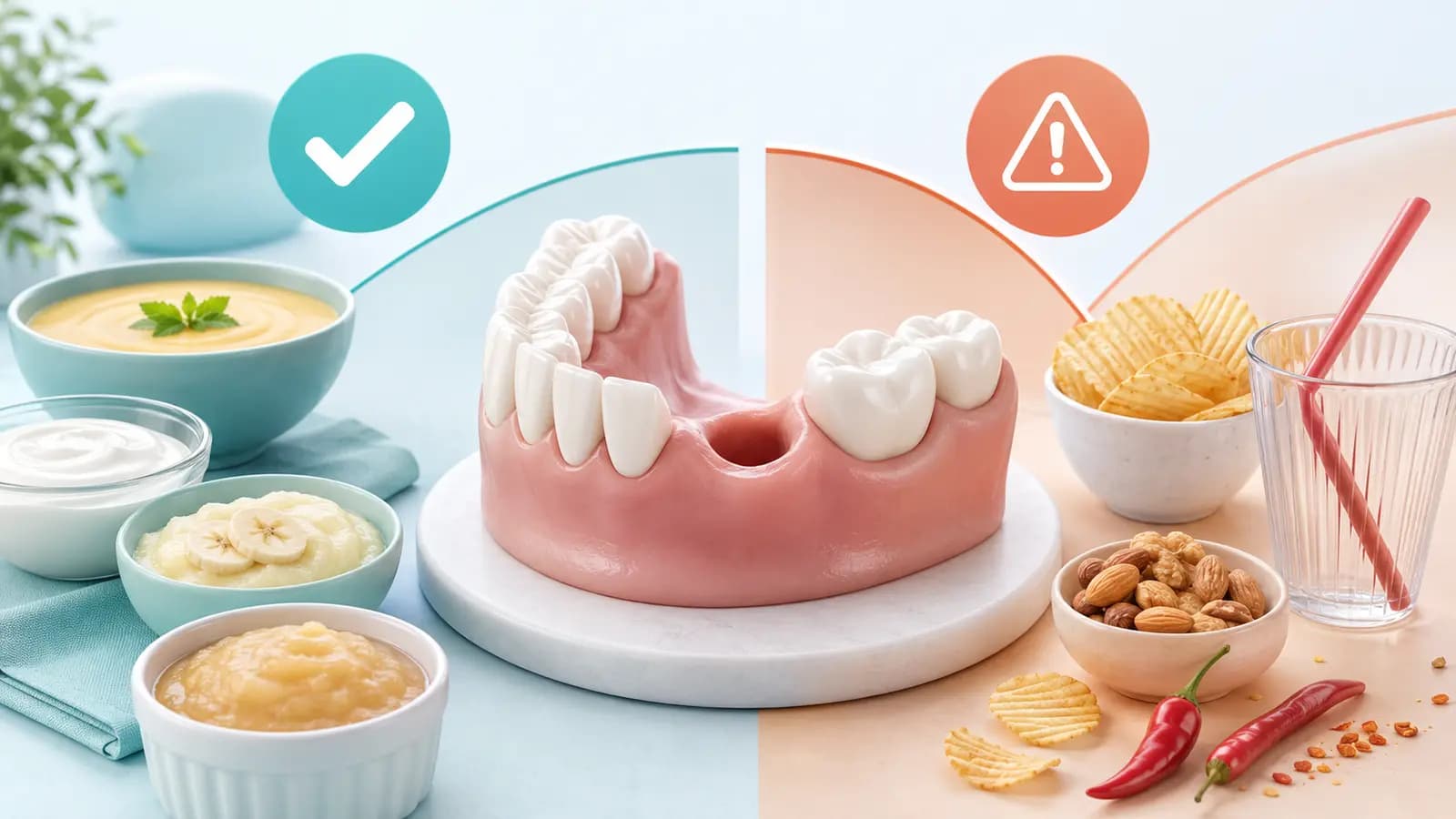
Choosing food after an extraction is not only about avoiding difficult chewing. The first priority is protecting the blood clot that forms inside the socket. That clot covers the underlying tissue and supports the early stages of healing.
If you are deciding what to eat after tooth extraction, begin with food that is soft, smooth, not hot and unlikely to leave sharp fragments. The right pace depends on the tooth removed, whether surgery or stitches were needed, and how your wound is progressing. Instructions from your treating dentist take priority over any general timeline.
When Can I Eat After Tooth Extraction?
Do not rush to chew while your lip, cheek or tongue is still numb. You could bite the soft tissue without noticing or burn your mouth with food that is hotter than it feels. Once the bleeding is controlled, the anaesthetic is wearing off and your dentist has said it is safe, start with water and cool or lukewarm soft food.
Use this as a practical guide rather than a fixed recovery promise:
| Recovery stage | More comfortable options | What to watch |
|---|---|---|
| First few hours | Small sips of water when permitted | Allow numbness to settle; do not use a straw |
| First day | Plain yoghurt, pudding, mashed potato, soft egg, cooled blended soup | Keep textures smooth and chew away from the socket |
| Days 2–3 | Soft porridge, tofu, tender fish, mashed banana or avocado | Increase texture only when bleeding is controlled and eating feels comfortable |
| Days 4–7 | Soft rice, pasta, noodles, cooked vegetables, tender minced meat | Reintroduce food gradually; avoid sharp pieces and foods that pack into the wound |
A straightforward extraction and wisdom tooth surgery do not always have the same recovery. If you are still preparing for treatment, the FLOSS guide to tooth extraction and wisdom tooth removal explains the assessment and planning that happen before the procedure.
Soft Foods After Tooth Extraction That Still Provide Nutrition
A soft diet does not have to mean living on ice cream. Your body still needs energy, protein, fluid, vitamins and minerals. Aim for simple combinations that are easy to swallow and do not contain seeds, hard toppings or sharp fragments.
1. Gentle sources of protein
Scrambled eggs, smooth yoghurt, silken tofu, flaked tender fish and very soft minced meat can help maintain protein intake. Serve them at a comfortable temperature and check carefully for bones, crisp skin or hard edges.
2. Easy carbohydrates
Mashed potato, smooth porridge, well-cooked oats, soft pasta and non-chewy noodles provide energy without demanding much from the jaw. Let hot dishes cool before eating. The smoother option is usually more comfortable during the first day.
3. Smooth fruit and vegetables
Mashed banana, avocado, pumpkin and well-cooked blended vegetables add variety. A smoothie can be suitable when it is not acidic and contains no seeds, but drink it from a cup rather than through a straw.
4. Cooled soups
Blended soup or broth can support hydration and energy intake when chewing is difficult. Keep it cool or lukewarm and avoid chilli, large vegetable pieces, bones or ingredients that leave small fragments.
Can You Eat Rice After a Tooth Extraction?
Rice does not need to be avoided for weeks, but dry or separate grains may enter the socket. During early recovery, choose very soft rice or porridge, take small mouthfuls and chew on the opposite side. If it feels uncomfortable, return to a smoother option.
Do not probe the socket with your tongue, finger, toothpick or another object when food feels trapped. Avoid forceful rinsing or spitting during the first 24 hours because disturbing the clot can restart bleeding. After that period, follow your dentist’s instructions for brushing and gentle warm salt-water rinses.
What Not to Eat or Drink During Early Healing
Early food restrictions reduce irritation, repeat bleeding and the chance of disturbing the clot. While the area is tender, avoid:
- hard or crunchy foods such as chips, nuts, popcorn and crusty bread;
- seeds, crumbs and other small pieces that can collect in the socket;
- very hot, spicy or acidic food and drinks;
- sticky or chewy food that requires strong jaw movement;
- alcohol, particularly when you are taking prescribed medication;
- straws, sucking the wound and forceful spitting; and
- smoking or nicotine during the early healing period.
Wisdom tooth surgery can involve a larger wound and more jaw stiffness than a simple extraction. Read about impacted wisdom teeth and their treatment to understand why individual aftercare may differ.
How to Eat Without Disturbing the Socket
- Take small mouthfuls. This reduces the need to open widely or chew forcefully.
- Chew on the other side. Keep direct pressure and food fragments away from the wound where possible.
- Drink from a cup. Suction from a straw may disturb the newly forming clot.
- Increase texture gradually. If a food triggers pain or fresh bleeding, return to a softer choice.
- Follow cleaning instructions. Do not rinse forcefully on the first day. Restart careful brushing and any recommended rinses at the time advised.
If the extraction is part of a holiday, allow recovery and review time before travelling onward. The guide to how long to stay in Bali for dental treatment explains why chair time alone is not enough. You can also review the broader reasons and risks of tooth extraction when discussing the treatment plan.
When Should the Socket Be Checked?
Mild soreness and swelling can occur, particularly after a more complex procedure. Contact the clinic if active bleeding does not stop after following the pressure instructions, pain becomes stronger after it had started improving, fever develops, a persistent unpleasant taste or smell appears, or swelling continues to increase.
Difficulty breathing or swallowing, or swelling that spreads rapidly through the face or neck, requires urgent medical attention.
Make Food Choices That Follow Your Recovery
Your return to a normal diet should follow the wound, not a rigid calendar. If you are uncertain whether the socket is stable enough for firmer food, a review is safer than testing it repeatedly at home.
Speak with Floss Dental for personalised dental care after an extraction and a recovery review with a dentist Bali.
FAQ About Eating After Tooth Extraction
What is the safest food to eat after tooth extraction?
Choose smooth food that is not hot and does not contain small hard pieces. Plain yoghurt, scrambled egg, mashed potato, soft porridge, silken tofu, mashed banana and cooled blended soup are practical examples. Include nourishing choices and chew away from the socket.
How long do I need to wait to eat after getting a tooth pulled?
Wait until your dentist permits it, bleeding is controlled and enough numbness has worn off to reduce the risk of biting your cheek or tongue. The timing varies with the procedure. Begin with water and soft food, then increase texture gradually according to comfort and your dentist’s instructions.